

If you have questions about Canberra commercial demolition, you aren’t alone. The growth of urban renewal and infrastructure projects is driving demand for commercial demolition in Canberra.
This article is written as a reference for developers, business owners, and project managers. We explain what commercial demolition entails, the types of services available, and how each step of the process works so you understand what happens throughout an ACT commercial demolition project.
What Is Commercial Demolition?
Commercial Demolition Canberra typically involves office buildings, retail centres, warehouses, factories, restaurants, and government premises. Commercial buildings can be much larger and more complex than residential homes, so commercial projects involve larger machinery, more personnel, tighter timelines, and stricter compliance obligations.
Given the size and complexity of these processes and the location of commercial properties, often near other premises, it is important that you don’t cut corners, which could lead to unsafe working. Ensure you only ever work with a licensed, insured contractor in the ACT.
Types of Commercial Demolition Services
This section lists the main categories of commercial demolition and explains when and why each is used.
Full Structural Demolition
- A full knockdown is when an entire structure is removed to make way for new construction
- It involves dismantling of the building’s core framework using excavators, high-reach arms, and other heavy plant
- Debris and waste materials are sorted for recycling, reuse, or landfill in accordance with ACT environmental requirements
Mechanical Demolition
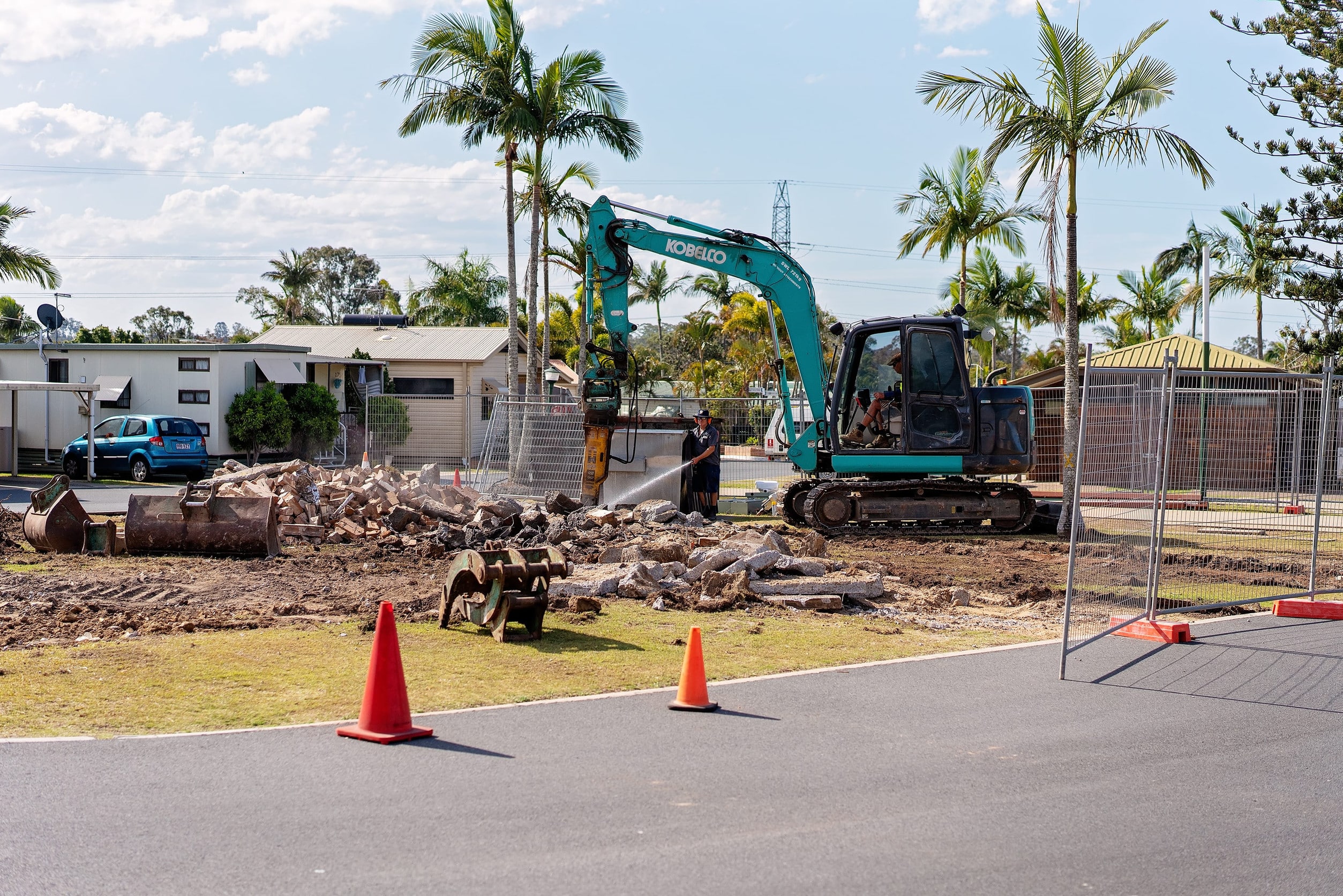
- Demolition involving the use of heavy equipment, like excavators, bulldozers, hydraulic shears, crushers, and hammers
- Suited to concrete and steel structures, office buildings, warehouses, and multi-storey commercial buildings
- This is the most commonly used method in commercial work. It’s cost-effective, scalable, and can be carried out in live environments where parts of a site remain operational
Selective Demolition and Internal Strip-Outs
- The controlled removal of interior non-structural elements: walls, ceilings, flooring, partitions, and services
- Businesses often choose selective demolition for refurbishments or end-of-tenancy make-goods.
- Commonly used in office towers, shopping centres, and government buildings. The difference between a full knockdown and a strip-out is that the shell of the building is retained
- Requires careful sequencing, particularly around shared services, neighbouring tenants, and hazardous materials
Partial Demolition
- Only part of a structure is removed to allow for extensions, renovations, or upgrades
- Useful when a business wants to retain portions of an existing structure while creating space for new development
- Includes removal of mezzanine floors, internal walls, plant and equipment, or specific structural sections. Often, entire bathrooms or kitchens are removed to allow an upgrade
- The business may be able to continue operations in unaffected parts of the building
- Requires a structural assessment to avoid compromising the integrity of the retained building
The Commercial Demolition Process, Step by Step
This section walks through the full commercial demolition process from initial enquiry to site handover. This is valuable for people researching what to expect.
Site Assessment and Consultation
- In the early stages before any physical work begins, a site visit is conducted to assess structural conditions, access routes, proximity to neighbouring properties, and potential hazards
- Structural engineers may be engaged to evaluate the building’s composition, including any elements requiring special handling
- This inspection forms the basis for the entire demolition plan and your quotation
Hazardous Materials Identification and Removal
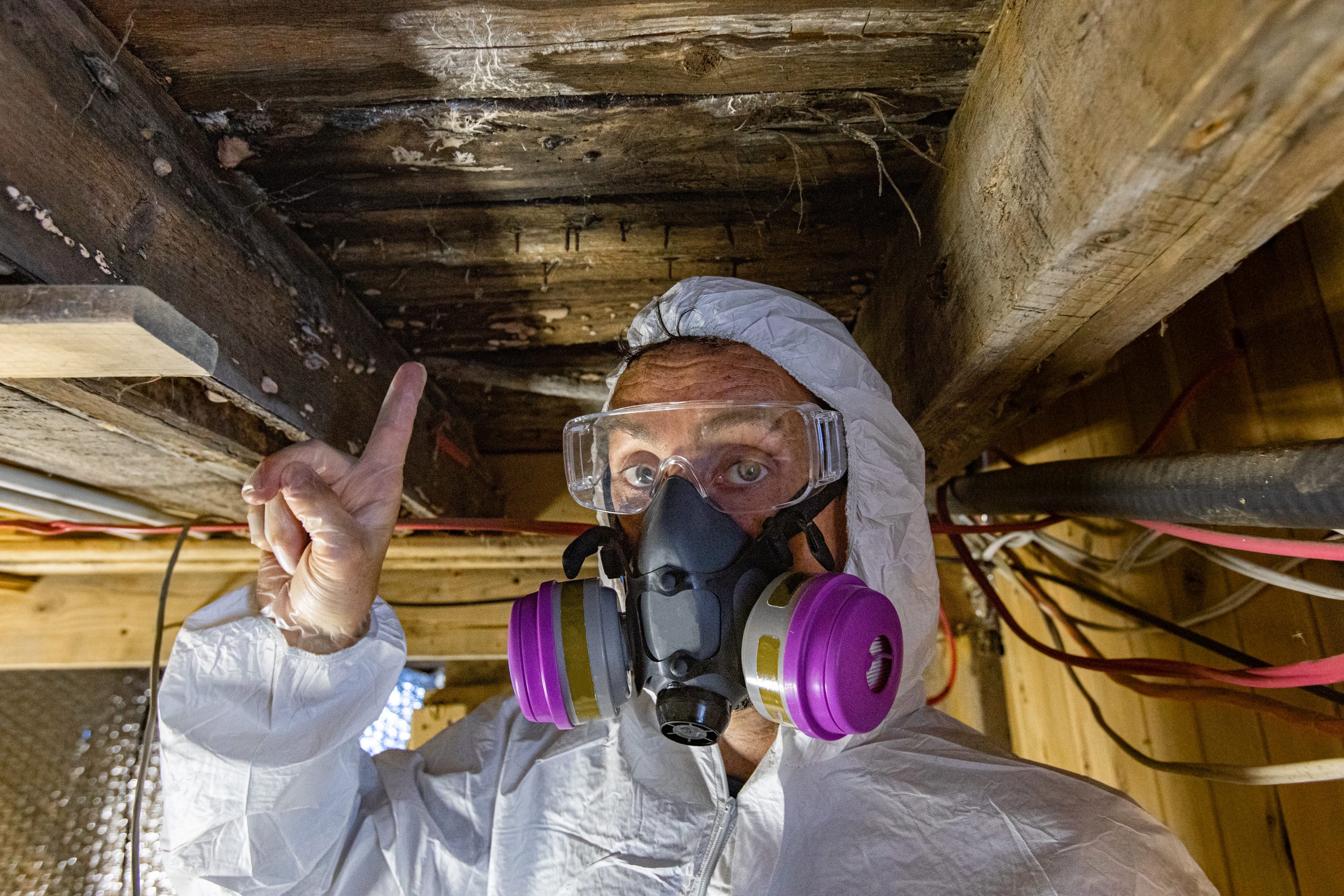
- Before demolition proceeds, a hazardous materials audit is conducted to identify asbestos, lead-based paint, and other regulated substances
- This is a critical and often overlooked topic, particularly relevant in older Canberra commercial buildings
- Licensed contractors must remove and dispose of these materials in accordance with ACT and federal regulations
- Skipping this step carries serious legal and safety consequences; it is non-negotiable on any commercial site
Permits and Regulatory Approvals
- All commercial demolition in Canberra requires permits from the relevant ACT government authorities
- Approvals may include planning permits, environmental assessments, road usage permissions, and utility disconnection sign-offs
- Rest assured, an experienced, local contractor will be familiar with current requirements and will handle this on your behalf
- Experienced contractors submit applications early and maintain regular communication with regulators to avoid project delays
Site Preparation
- The following all take place on-site before demolition begins
- Utilities (electricity, gas, water, telecommunications) are disconnected prior to work commencing
- Fences and safety barriers, warning signs, exclusion zones, and dust suppression systems are installed
- Neighbouring businesses and residents are notified, and site access is controlled for the duration of the project
Demolition Execution
- Structural demolition follows a carefully planned sequence, normally working from the top down to maintain stability throughout
- Heavy plant and specialised equipment are deployed in accordance with the approved demolition plan
- Dust suppression, noise control, and continuous monitoring protect the surrounding area and comply with ACT environmental requirements
- On-site safety management is a priority throughout the process, with all workers on site issued with personal protection equipment (PPE)
Waste Management and Recycling
- Debris is sorted on-site and categorised for recycling, reuse, or landfill disposal
- Concrete, steel, timber, and other materials are often recovered and redirected to recycling facilities
- A waste management plan is typically required as part of the permit application and must be followed throughout the project
Site Clean-Up and Handover
- On completion, the site is cleared of all debris, soil is graded, and any required contamination testing is carried out
- The contractor provides documentation, including a demolition certificate, materials recycling report, and any asbestos clearance certificates
- The site is then handed over, often with a walk-around for the business owner, ready for the next phase of development
Key Factors When Choosing a Commercial Demolition Contractor in Canberra
Given the scale, complexity, and need for expert safety measures, it is crucial to the project’s efficiency and the safety of your employees and the local community that you consider only trusted, experienced commercial demolition Canberra contractors.
Some of the things you must consider:
- Confirm the contractor holds the appropriate demolition licence for restricted demolition work in the ACT
- Public liability and workers’ compensation insurance should be verified before any contract is signed
- Experience with similar project types, whether retail, office, industrial, or government
- Demonstrated asbestos removal and hazardous materials handling capabilities
- Transparent quoting, clear timelines, and a track record of working with councils and regulators
Work With a Trusted Commercial Demolition Team in Canberra
Capital Demolition Services are experienced ACT-based contractors covering Canberra and the surrounding regions.
Our Canberra Commercial Demolition services include internal stripouts for remodelling or refurbishment, partial demolition for extensions, additions or modifications and full commercial demolition to free the space for new buildings.
Contact our experts today to arrange a consultation and get your free quote.





Leave A Comment